

What if the true history of the world's most secretive units is far more compelling than the Hollywood dramatisations suggest? Most military history enthusiasts have felt the frustration of wading through sensationalist "pulp" accounts that prioritise flash over technical accuracy. You're likely looking for the grit and reality of Special Forces operations, but finding authentic, out-of-print memoirs from early SAS or SBS operators can feel like a mission in itself.
We understand that distinguishing between various elite regiments requires more than just a cursory glance at modern headlines. This article promises to guide you through the evolution of global units and their unconventional tactics, stripping away the hype to focus on documented history. You'll discover a clear timeline of legendary operations and gain access to a curated selection of reliable research materials. From sourcing rare specialist titles to understanding the technical nuances of elite warfare, we've organised this guide to help you build a library that reflects the quiet authority of those who served.
Key Takeaways
- Learn to distinguish between standard elite infantry and true Special Forces by understanding their specific roles in unconventional warfare and surgical strikes.
- Trace the history of modern units back to their Second World War origins, including the "butcher and bolt" raids of the Commandos and the desert navigation of the LRDG.
- Explore the evolution of the SAS and SBS during the Cold War and how they developed essential jungle warfare and "hearts and minds" tactics.
- Discover how to filter out sensationalised accounts by identifying primary sources and authentic memoirs written by the operators themselves.
- Gain expert advice on sourcing rare and out-of-print titles to build a comprehensive research library focused on land, naval, and aviation warfare.
What Defines Special Forces? Understanding Elite Military Units
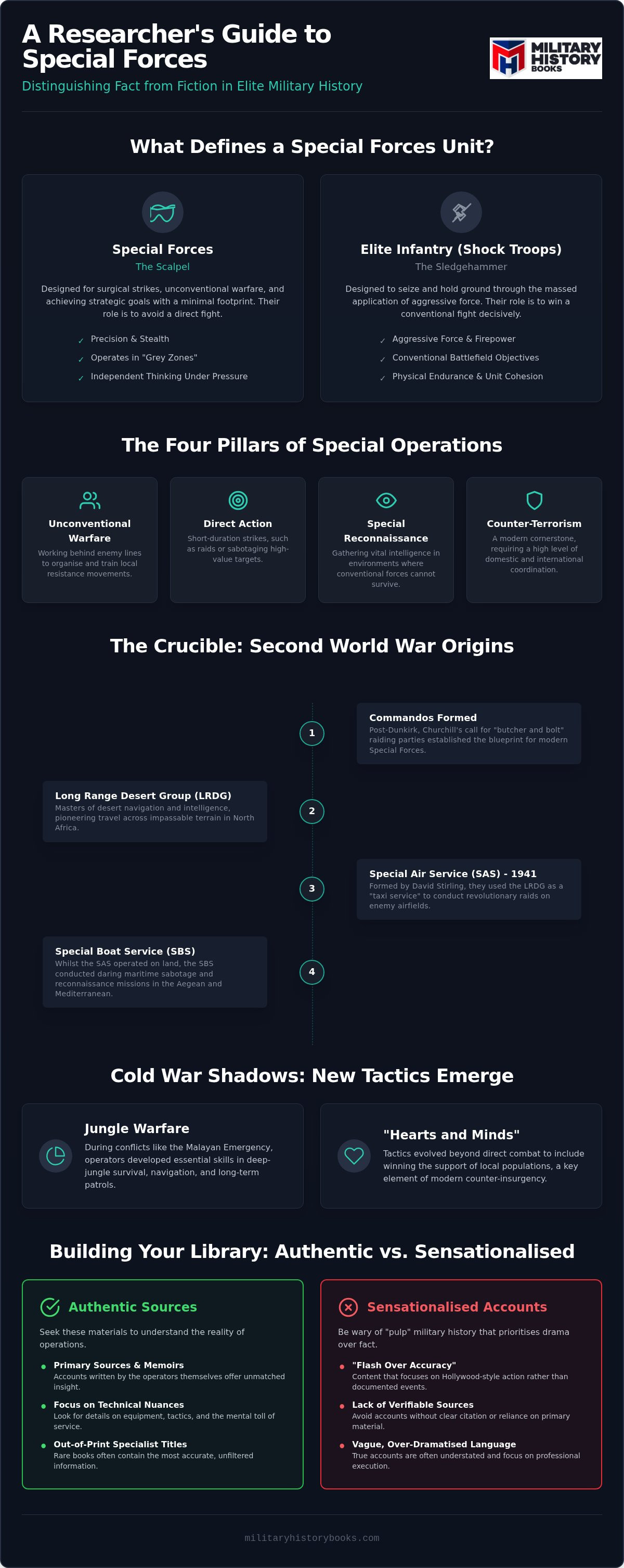
The term "Special Forces" is often used as a catch-all for any unit that wears a distinctive beret or performs well on the range, but the reality is far more nuanced. True Special forces are defined not just by their equipment, but by their mandate to operate in the "grey zone" where conventional military logic often fails. While a standard battalion focuses on the massed application of firepower, these elite units specialise in precision, stealth, and the ability to achieve strategic goals with a minimal footprint. Understanding this distinction is essential for any researcher or enthusiast looking to look past the sensationalism of modern media.
The Four Pillars of Special Operations
To understand these units, one must look at the four core pillars that define their operational life. Unconventional warfare involves working behind enemy lines to organise and train local resistance movements. Direct action refers to short-duration strikes, such as raids or sabotaging high-value targets. Special reconnaissance involves gathering vital intelligence in environments where conventional forces simply cannot survive. Finally, counter-terrorism has become a modern cornerstone, requiring a level of domestic and international coordination that sets these operators apart from their infantry counterparts. Each pillar requires a different tactical approach and a unique set of technical skills.
Special Forces vs. Shock Troops: A Tactical Distinction
It's common for casual observers to confuse high-readiness elite infantry, such as the Parachute Regiment or the Royal Marines, with Special Forces. The difference lies in the objective. Elite infantry are "shock troops" designed to seize and hold ground through aggressive force. In contrast, an operator's role is often about avoiding a fair fight entirely. They're the scalpel, not the sledgehammer.
The "Selection" process is the primary filter here. It isn't just a test of physical endurance; it's a psychological evaluation designed to find individuals who can think independently under extreme pressure. This shift from massed force to the precision application of military power is what makes primary literature so vital. Reading a memoir from an operator who served in the Malayan Emergency or the Falklands provides a window into this mindset that a standard history book cannot replicate. These accounts detail the technical nuances of the trade, from the specific weight of a pack to the mental toll of long-term covert surveillance. For the serious researcher, these authentic narratives are the only way to truly grasp the individual's role within the collective unit.
The Origins of Modern Special Forces in the Second World War
The Second World War served as the ultimate crucible for unconventional warfare. Following the evacuation at Dunkirk, Winston Churchill recognised that Britain couldn't immediately defeat the Axis powers through conventional means alone. He called for the creation of "butcher and bolt" raiding parties, a directive that led to the birth of the Commandos and established the blueprint for modern Special Forces. These early elite military units were designed to strike fear into the enemy and force them to divert resources to defend every inch of occupied coastline.
The Long Range Desert Group and the SAS
In the vast North African desert, the Long Range Desert Group (LRDG) became the masters of navigation and intelligence. They pioneered the use of sun compasses and modified vehicles to cross terrain previously deemed impassable. When David Stirling formed the Special Air Service (SAS) in 1941, he relied on the LRDG to act as a "taxi service," delivering his men to the edge of enemy airfields. These raids revolutionised warfare; instead of large-scale infantry charges, small teams used Jeeps mounted with twin Lewis guns to destroy hundreds of aircraft on the ground. For those interested in the technical details of these desert operations, our specialist collection of land warfare books offers deep insights into the equipment and survival tactics used in the Sahara.
The SBS and Maritime Special Operations
Whilst the SAS operated in the dunes, the Special Boat Service (SBS) took the fight to the water. Under the leadership of figures like Lord Jellicoe, the SBS conducted daring maritime sabotage and reconnaissance missions across the Aegean and Mediterranean. Perhaps the most famous maritime raid was Operation Frankton, where the "Cockleshell Heroes" paddled canoes into Bordeaux harbour to plant limpet mines on German shipping. These operations required a unique blend of physical endurance and technical expertise in explosives. Researchers can explore these daring raids through our curated range of naval history books, which document the evolution of maritime sabotage from its infancy to the sophisticated operations of the late war.
The Special Operations Executive (SOE) added a final layer to this unconventional front. Tasked by Churchill to "set Europe ablaze," they worked amongst resistance movements to sabotage infrastructure and gather intelligence. These diverse organisations laid the groundwork for the modern Special Forces structures we recognise today. Together, these units proved that a small, well-trained group could achieve strategic effects far beyond their numbers.
Cold War Shadows: The Evolution of the SAS and SBS
After the global conflict ended in 1945, the British military underwent significant downsizing. This led to the temporary disbandment of the SAS, but the onset of the Cold War and colonial uprisings soon proved that conventional forces weren't enough. The 1948 Malayan Emergency necessitated the urgent re-formation of the regiment as the Malayan Scouts, eventually reverting to the SAS title. This era saw Special Forces shift from wartime raiders into sophisticated counter-insurgency specialists, adapting to environments that were as hostile as the enemy itself.
Jungle Warfare and Counter-Insurgency
Living in the deep jungle for weeks on end became a hallmark of the regiment during the campaigns in Malaya and Borneo. Operators didn't just fight; they lived amongst indigenous populations, perfecting a "hearts and minds" strategy that was revolutionary for its time. This approach moved away from pure destruction, focusing instead on securing the trust and support of local communities to deny the enemy a foothold. These campaigns shaped modern counter-insurgency doctrine and remain studied by military professionals today. Finding authentic memoirs from these "forgotten" wars of the 1950s and 60s is essential for anyone wanting to understand how these units mastered the art of jungle survival and stealth.
Operation Nimrod and the Modern Era
For decades, these units operated almost entirely in the shadows. That changed on 5th May 1980. The world watched live as the SAS stormed the Iranian Embassy in London to end a six-day siege. Operation Nimrod didn't just rescue hostages; it placed the regiment firmly in the public consciousness and redefined the role of Special Forces in domestic security. This period saw the rise of Counter-Revolutionary Warfare (CRW) wings, specialising in high-stakes interventions and urban combat. For those researching the individuals behind these black-clad figures, browsing military biography books offers a grounded perspective that looks past the sensationalist media coverage of the time.
The 1982 Falklands Conflict later re-emphasised the need for classic maritime and mountain expertise. Working in sub-zero temperatures, the SBS and SAS conducted vital reconnaissance and raids, such as the attack on Pebble Island. These operations proved that even in an era of advancing technology, the individual operator's resilience and unconventional thinking remained the military's most potent tool. This period of evolution ensured that elite units were ready for the complex, asymmetrical challenges of the late 20th century.
Researching Elite Units: How to Find Authentic Special Forces Accounts
Finding genuine information about Special Forces is often a challenge due to the sheer volume of sensationalist accounts that prioritise entertainment over technical accuracy. For the serious researcher, the most reliable window into this secretive world is primary literature. Memoirs written by the operators themselves offer the technical grit and psychological reality that historians crave, even when specific details remain redacted for security. Unlike popular fiction, these authentic accounts focus on the mundane but vital aspects of the trade: the failure of a radio in a damp jungle, the exact weight of a ruck, or the mental fatigue of a long-term observation post.
Spotting Reliable Military Literature
Distinguishing between an authentic account and a ghost-written "potboiler" requires a discerning eye. When evaluating a potential addition to your library, consider these criteria:
- Author Credentials: Prioritise works written by veterans or recognised historians who have demonstrated access to unit archives.
- Citations and Bibliographies: A scholarly or reliable work will always point the reader towards its sources, allowing for independent verification.
- Tone and Language: Be wary of accounts that rely on hyperbole or focus solely on high-octane action whilst ignoring the broader strategic context.
Cross-referencing these personal narratives with official declassified records from the National Archives can often fill in the gaps left by the author's memory or security requirements. This methodical approach ensures that your understanding of elite warfare is built on a foundation of fact rather than mythology.
The Importance of Specialist Bookshops
General retailers often focus on mass-market bestsellers, meaning they frequently miss the technical manuals, unit histories, and limited-edition memoirs that form the backbone of serious research. This is where out of print military books become invaluable. These rare titles were often produced in small quantities for a specialist audience, preserving technical details that never made it into mainstream publications. Sourcing these through a veteran-owned business ensures you're dealing with someone who understands the historical weight and technical nuances of the material.
Building a comprehensive library of wartime history books UK allows you to track the evolution of tactics from the Second World War through to modern counter-insurgency. If you're struggling to find a specific title or need guidance on which primary accounts offer the most authentic insights, we invite you to browse our curated collection of over 10,000 specialist titles today. Having a knowledgeable curator can make the difference between a collection of "pulp" stories and a truly authoritative reference library.
Building Your Special Forces Library with Military History Books
Building a library that truly reflects the history of Special Forces requires more than just picking up the latest paperback from a high street shelf. It's about finding those specific titles that offer deep-seated technical details and authentic narratives. At Military History Books, we've spent years curating a collection of over 10,000 specialist titles across land, aviation, and naval warfare. Being managed by an RAF veteran means we understand the historical weight of these materials. We don't just sell books; we help preserve the stories and human experiences that define elite military service.
Sourcing Rare and Out-of-Print Titles
Finding elusive memoirs from the Second World War or the Cold War often requires a methodical search through specialist archives. These rare first editions and technical manuals provide a level of detail that modern reprints sometimes lack. Whilst memoirs offer a personal perspective, contemporary context is often best found in periodical literature. Accessing back issue military magazines UK can help researchers see how operations were perceived at the moment they occurred. Our commitment to preserving this history means we actively source out-of-print material that general retailers simply don't carry.
Specialist Categories for the Serious Collector
To build a comprehensive reference library, one must look at the specific branches of service that support and comprise elite units. Each category offers a different perspective on the evolution of unconventional tactics:
- Aviation History: Explore the vital role of the Joint Special Forces Aviation Wing. These titles cover the technical aspects of insertion and extraction in hostile territory, from the early Lysander flights to modern helicopter operations.
- Naval History: Our collection includes deep dives into the SBS and the history of maritime sabotage. These works detail the development of canoe-borne raids and underwater demolition tactics that were pioneered during the 1940s.
- Land Warfare: We offer comprehensive accounts of the SAS and the LRDG, focusing on the tactical evolution of desert and jungle warfare. These books provide the grit and technical accuracy that serious researchers require.
Digital titles and back-issue magazines serve as excellent tools to fill gaps in a physical collection. Whether you're looking for a rare memoir from a Malayan Emergency operator or a technical manual on 1980s counter-terrorism tactics, our archive is designed to support your research journey. We believe that a well-kept library is a bridge between the past and the modern enthusiast, and we're here to help you navigate that history with confidence.
Expanding Your Knowledge of Elite Warfare
The evolution of elite units from the rugged desert raids of the 1940s to the complex counter-terrorism operations of the modern era demonstrates a constant need for unconventional thinking. Understanding this history requires a shift away from modern "pulp" fiction and towards the authentic memoirs and technical manuals that preserve the reality of service. These primary accounts offer the only true way to grasp the psychological and tactical depth of global Special Forces.
Building an authoritative library is a journey of discovery that relies on finding the right sources. As a specialist retailer managed by an RAF veteran, we're dedicated to helping you find those elusive titles that general bookshops overlook. With over 10,000 specialist titles in stock and secure international delivery for collectors worldwide, we ensure that the lessons of the past remain accessible to the researchers of today. We invite you to browse our extensive collection of Special Forces and elite warfare books to find the next cornerstone for your research. We look forward to helping you uncover the stories that define military excellence.
Frequently Asked Questions
What is the difference between the SAS and the SBS?
The primary difference lies in their operational environments and origins. Whilst the Special Air Service focuses on land and air insertions, the Special Boat Service specialises in maritime and amphibious operations. Both units share a rigorous selection process, but SBS candidates must pass additional, arduous water-based tests. Historically, the SBS originated from the Royal Marines, whereas the SAS drew its initial recruits from various army regiments during the North African campaign.
How do I know if a Special Forces memoir is historically accurate?
Accuracy is often found in the technical details rather than the high-octane action. Historically reliable Special Forces memoirs focus on the mundane realities of the trade, such as equipment failures, logistical hurdles, and the psychological weight of long-term observation. Look for authors with verifiable credentials and check for bibliographies in scholarly works. Avoid accounts that rely on hyperbole or "ghost-written" styles that prioritise entertainment over technical precision and historical context.
Are there any Special Forces units in the Royal Air Force?
The Royal Air Force contributes significantly through the Joint Special Forces Aviation Wing (JSFAW). This wing includes 7 Squadron and 658 Squadron, providing specialist insertion and extraction capabilities for elite units. Additionally, the RAF Regiment’s 2nd Squadron is a parachute-trained unit that often works in support of special operations. As a business managed by an RAF veteran, we stock several aviation history books that detail these specific roles and their tactical evolution.
Where can I find rare or out-of-print books about the SAS?
Rare and out-of-print titles are best sourced through specialist military bookshops rather than general retailers. Our inventory features over 10,000 specialist titles, including elusive memoirs from the Second World War and the Cold War eras. Because we focus exclusively on land, naval, and aviation warfare, we can often locate limited-edition unit histories and technical manuals that are no longer in general circulation, providing researchers with the primary sources they need.
What were the "Cockleshell Heroes" and which books cover them?
The "Cockleshell Heroes" were a group of Royal Marines who conducted Operation Frankton in 1942. They used canoes to plant limpet mines on German shipping in Bordeaux harbour. For those interested in this daring raid, "The Cockleshell Heroes" by C.E. Lucas Phillips is a definitive account. We also offer various naval history books that explore the broader technical development of maritime sabotage and the specialized equipment used in canoe-borne operations.
Can I buy digital versions of old military magazines about Special Forces?
We offer a variety of digital titles available for download or on disc, which is ideal for researchers who need portable access to historical data. These digital resources often include rare technical manuals and archived material. Additionally, we maintain a large stock of physical back issue magazines and modelling magazines. These provide a unique contemporary perspective on Special Forces operations as they were reported and understood at the time.
Who was the founder of the Special Air Service?
David Stirling is widely recognised as the founder of the Special Air Service, having conceived the idea of small-unit raids whilst recovering from a parachuting accident in Cairo. However, the regiment's early success also relied heavily on Jock Lewes, who developed the Lewes bomb, and Paddy Mayne, a legendary tactical leader. Their combined unconventional thinking transformed the way the British military approached behind-the-lines operations during the Second World War.
What role did the LRDG play in Special Forces history?
The Long Range Desert Group (LRDG) acted as the essential "taxi service" and navigational guides for the early SAS in North Africa. Without their mastery of the sun compass and modified vehicles, Stirling’s teams couldn't have reached their targets across the Sahara. They pioneered the long-range reconnaissance and intelligence-gathering tactics that remain a cornerstone of special operations today. Their ability to survive and navigate the deep desert was a feat of technical brilliance.


