

The most valuable insights into military history aren't usually found on the front tables of a high-street bookshop. You've likely felt the frustration of browsing generic shelves only to find the same mass-market accounts, whilst the technical details or rare unit histories you actually need remain elusive. Finding authentic wartime history books UK collectors and researchers can rely on requires moving beyond the mainstream and into the world of specialist archives.
It's a common challenge to distinguish between a popular narrative and a rigorous primary source, especially when your goal is accuracy or historical preservation. We understand that a serious library deserves more than just the latest bestseller; it requires a curated selection of land, naval, and aviation history that stands the test of time. This article identifies the essential categories of military literature, helping you understand the true value of rare versus mass-market formats.
You'll learn how to categorise different types of military media and where to find trusted, niche sources for out-of-print titles. Whether you're a seasoned researcher or a dedicated enthusiast, this reference provides the clarity needed to build a collection with depth and authority.
Key Takeaways
- Learn how to navigate the diverse landscape of wartime history books UK enthusiasts collect, from personal memoirs to official campaign records.
- Understand the essential distinctions between aviation, naval, and land warfare literature to better focus your research or private collection.
- Discover why technical manuals and modelling references provide a level of granular detail that standard narrative histories often overlook.
- Gain practical advice on sourcing rare, out-of-print titles and preserving fragile first editions for future generations of historians.
- Explore the benefits of expert curation, allowing you to access a vast archive of over 10,000 specialist titles not found in high-street shops.
The Landscape of Wartime History Books in the UK
The study of conflict is deeply woven into the fabric of British culture. Because the Military history of the United Kingdom spans centuries and touches almost every corner of the globe, the resulting literature is incredibly diverse. The landscape of wartime history books UK enthusiasts explore is remarkably broad. It encompasses everything from the deeply personal reflections found in soldiers' memoirs to the meticulous, data-heavy records of official campaign histories. This variety isn't accidental. Britain’s long-standing tradition of military record-keeping has made the country a global centre for both publishing and research.
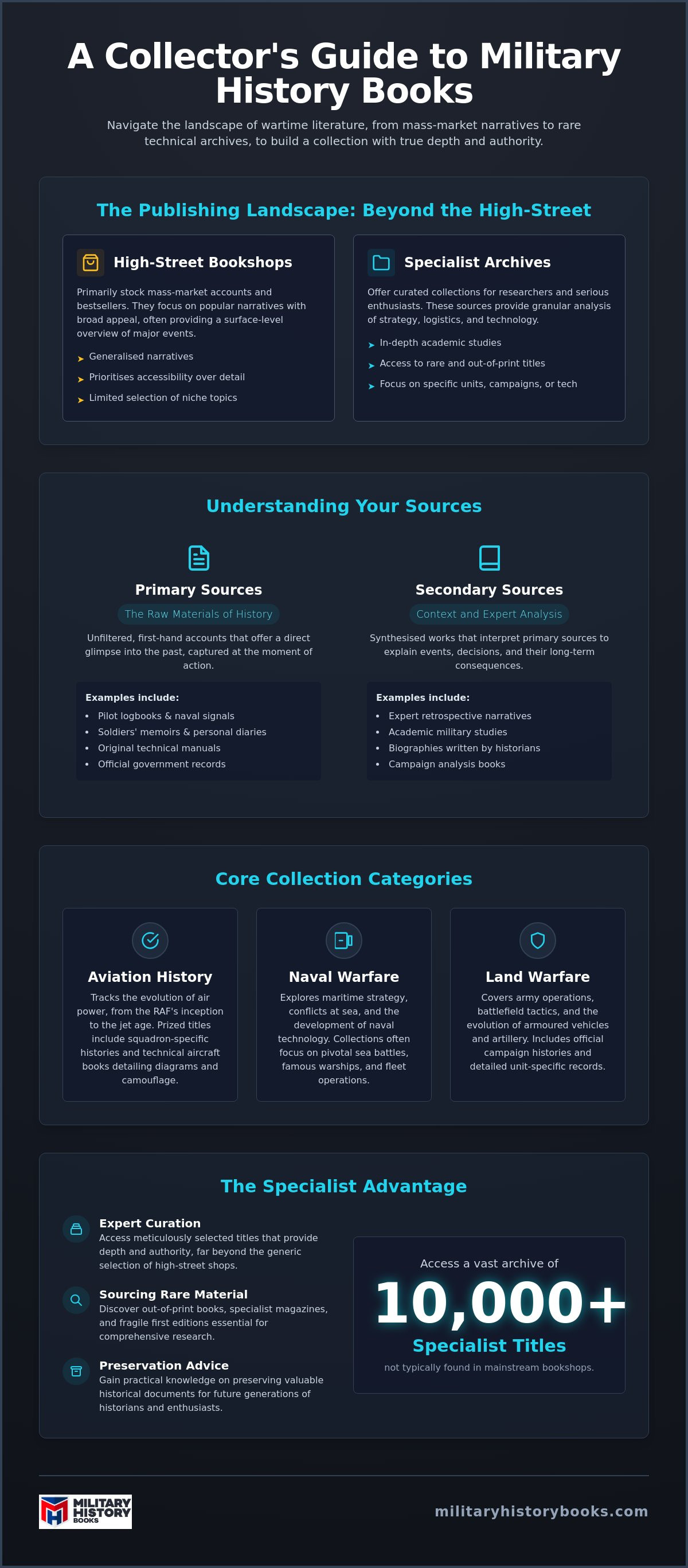
For many British historians, the preservation of these stories is a matter of national heritage; it's a way to honour the human experience whilst documenting the technical evolution of warfare. Whilst high-street bookshops often focus on popular history, which prioritises a compelling narrative and broad appeal, serious researchers usually look for academic military studies. These works provide a more granular analysis of strategy, logistics, and command. Understanding the distinction between these styles is essential for anyone looking to build a comprehensive library that offers more than just surface-level anecdotes.
Primary vs Secondary Sources in Military Literature
A balanced historical perspective requires both primary and secondary sources. Primary sources are the raw materials of history. These include pilot logbooks, naval signals, and original technical manuals for armoured vehicles. They offer an unfiltered glimpse into the past, captured at the moment of action. Secondary sources, such as expert retrospective narratives, provide the necessary context. They synthesise disparate facts to explain why certain decisions were made and what their long-term consequences were. Using both allows a collector to move beyond the "what" and understand the "why" of military events.
The Evolution of Wartime Publishing
Wartime publishing has changed significantly over the decades. In the immediate post-war years, the market was dominated by personal memoirs and official histories authorised by the government. These provided the foundational stories of the era. Today, we see a rise in investigative history and niche specialist publishers who focus on specific units or forgotten theatres of war. Digital archiving has also transformed accessibility. Many out-of-print titles and rare technical documents are now available as digital downloads; this ensures that even the most obscure military records remain available for modern study. This evolution reflects a growing desire amongst the public to understand the technical and human details of wartime history books UK specialists work hard to preserve.
Key Categories: From Royal Air Force Chronicles to Naval Warfare
Building a meaningful collection requires an understanding of how military literature is organised. Whilst many general retailers focus on broad World War II narratives, serious researchers often categorise their libraries by service branch or specific theatre of operation. This structured approach allows for a deeper exploration of the tactical and technical developments that defined 20th-century conflict. The variety of wartime history books UK collectors can access today is vast, ranging from high-level strategic overviews to the granular details of a single squadron's daily log.
Beyond the front lines, many enthusiasts also seek to understand the civilian experience and the logistical efforts that sustained the military. For those interested in the social impact of conflict, The National Archives Home Front resources provide an excellent foundation for understanding the British domestic experience between 1939 and 1945. These primary records complement the more traditional military histories found in many private collections.
Aviation and the Royal Air Force
Aviation literature is a cornerstone of British military history. It tracks the rapid evolution of the RAF from the wood-and-canvas biplanes of the First World War to the sophisticated jet age. Essential titles often focus on the Battle of Britain or the strategic campaigns of Bomber Command. For those involved in restoration or scale modelling, technical aircraft books provide indispensable diagrams and camouflage details. Squadron-specific histories are particularly prized amongst researchers, as they offer a day-by-day account of operations that broader histories often overlook.
Naval and Land Warfare Collections
Naval history offers a unique perspective on Britain’s global role, with chronicles of the Royal Navy’s struggle in the Atlantic and the complex submarine warfare of the Pacific theatre. Similarly, land warfare literature provides a detailed look at the evolution of armoured combat and infantry tactics. From the early tank designs of the Great War to the massive armoured clashes of the 1940s, these books explain how technology reshaped the battlefield. Campaign-specific studies, whether focusing on the Peninsula War or the D-Day landings, remain vital for understanding the logistical reality of major operations.
Finding the right balance between these categories is what makes a collection truly comprehensive. If you are looking for specific unit histories or technical publications that are no longer in print, browsing a curated selection of specialist military history books can help you find those elusive titles that high-street shops rarely stock. This targeted approach ensures your research is supported by the most accurate and detailed sources available.
Narrative Histories vs Technical Manuals and Modelling References
Narrative histories often serve as the ideal starting point for those beginning their journey into military literature. These works focus on the human experience, weaving compelling stories of bravery and strategy that provide a broad context for major events. Whilst these accounts are essential for building a foundational understanding, many enthusiasts eventually find themselves drawn to the more granular details of the conflict. This is where technical manuals and specialist references become invaluable, offering a level of precision that narrative prose cannot match. The market for wartime history books UK collectors seek is increasingly focused on these technical aspects as they provide a deeper connection to the mechanical reality of the era.
Technical publications preserve the mechanical history of wartime in its purest form. They were never intended for public consumption; instead, they were functional tools designed to keep equipment running under extreme conditions. For serious researchers, these documents represent primary sources that offer definitive answers on how technology actually functioned on the front lines. This shift from general storytelling to technical analysis marks the transition from casual reading to serious historical study.
The Role of Technical Military Publications
Technical military publications are essentially the blueprints of history. They include original operating procedures, maintenance schedules, and detailed blueprints for everything from a Spitfire’s Merlin engine to the complex sighting systems used in armoured vehicles. Collectors often seek out original technical literature because it documents the exact specifications of the time. For those involved in historical restoration or exacting scale modelling, these technical books provide indispensable data that ensures every detail is historically accurate. They allow a researcher to understand the physical limitations and capabilities of the equipment used by service personnel.
Modelling Magazines as Historical Records
There is a significant and long-standing overlap between the military history community and the world of scale modelling. Modelling magazines have served as vital historical records for decades, often publishing niche research that isn't found in broader academic texts. Titles such as Airfix Magazine or various specialist modelling journals often include rare photographs and detailed camouflage schemes that are essential for accurate research. Finding back issue magazines is a common pursuit for those looking for specific unit markings or field modifications. These publications act as a bridge, turning raw technical data into visual references that help enthusiasts recreate the past with exacting accuracy.
By combining narrative accounts with technical data and visual references from modelling media, a researcher can build a truly three-dimensional view of history. It is the difference between simply knowing that a battle occurred and understanding the mechanical reality of the machines that fought it.
Sourcing Specialist Material: Rare Editions and Back Issue Magazines
Finding the specific wartime history books UK researchers require often involves a search that goes far beyond the local library or major retail chains. Many of the most significant works, particularly those published shortly after the World Wars, have long been out of print. These titles frequently contain raw, unedited accounts that haven't been sanitised for a modern audience, making them essential for authentic research. Sourcing these materials requires a methodical approach and a reliance on specialists who understand the provenance and historical significance of individual volumes.
Identifying a rare first edition, especially a signed memoir or a limited-run unit history, requires a keen eye for detail. Collectors look for specific indicators such as publisher imprints, binding styles, and the presence of original dust jackets, which can significantly affect both the historical and monetary value of a book. Whilst some might view book collecting as a purely financial pursuit, for the dedicated historian, it's about the preservation of a physical link to the past. Specialist booksellers play a crucial role here, acting as curators who verify the authenticity of rare stock and ensure these fragile records find their way into the hands of those who will value them.
Back issue military magazines offer another layer of granular research that books sometimes miss. These periodicals often featured contemporary analysis, rare photographs, and detailed maps that were never reprinted elsewhere. For those studying specific camouflage patterns or the minute details of a particular campaign, a well-preserved magazine from several decades ago can be the missing piece of the puzzle.
Tracking Rare and Out-of-Print Titles
Building a collection of rare military literature is a rewarding but complex endeavour. Authentic first editions are often identified by specific points known to bibliophiles, such as typographical errors in the first printing or specific cloth colours used by the binder. Relying on a specialist who understands these nuances is the most effective way to build a library that retains its value. A carefully curated collection doesn't just represent a financial asset; it serves as a robust archive for future generations of historians.
The Digital Shift: Downloads and Discs
Whilst the tactile experience of a physical book is irreplaceable, the digital shift has provided researchers with unprecedented levels of accessibility. Digital titles, available through downloads or on disc, allow for high-resolution archiving of fragile documents that might otherwise be too delicate to handle. These formats are particularly useful for technical manuals and large-scale maps, as they allow for zooming and easy cross-referencing without the risk of damaging a rare original. Organising a digital library with clear metadata ensures that you can locate specific technical specs or historical data in seconds, making it a highly efficient tool for active research projects.
If you're struggling to find a specific out-of-print volume or want to explore an extensive digital archive, you can browse our collection of rare and digital titles to find the exact reference you need for your project.
Why Choose a Specialist Military History Bookseller?
Choosing where to source your literature is as important as the research itself. Whilst large online marketplaces rely on algorithms to suggest popular titles, they often lack the nuance required to distinguish between a casual read and a vital piece of historical evidence. A specialist bookseller acts as a bridge between the vast historical record and the individual enthusiast. By focusing exclusively on military history, we ensure that the wartime history books UK collectors receive have been handled with an understanding of their historical weight and physical fragility.
There is a distinct advantage to working with a business managed by an RAF veteran. This first-hand experience creates a standard of curation that general high-street shops cannot replicate. It means every title in an inventory of over 10,000 works has been selected for its accuracy, depth, and relevance to the field. Whether you're looking for a rare unit history or a technical manual for a specific aircraft, having a knowledgeable guide makes the process of building a library much more efficient.
Beyond the expertise, choosing an independent UK specialist supports the ongoing preservation of British military heritage. We don't just sell books; we maintain an archive that respects the stories of those who served. This personalised service allows for a level of assistance that automated systems fail to provide, such as tracking down elusive titles or suggesting foundational works for those just starting their collection.
The Specialist Advantage
General retailers frequently overlook the technical and niche publications that form the backbone of serious research. A specialist understands that the condition of a 1940s manual or the presence of specific maps in a campaign history is non-negotiable. You can trust that the stock has been accurately described and carefully stored, ensuring your investment is protected. This level of reliability is essential when dealing with out-of-print or fragile materials that require expert assessment before they are listed for sale.
Building Your Library with Military History Books
Starting a collection can feel overwhelming, but focusing on foundational wartime history books provides a solid base for future expansion. These might include official histories or seminal biographies that define a particular conflict. For those looking to share this passion, specialist sellers are also the best source for military history gift books that offer genuine value to an enthusiast. Exploring a curated archive ensures that every addition to your shelves contributes to a deeper, more accurate understanding of our national heritage.
Browse our collection of over 10,000 military history titles
Building Your Definitive Military Library
Developing a comprehensive archive requires moving beyond the mainstream and seeking out the technical manuals, unit histories, and rare memoirs that define serious scholarship. By understanding the distinction between popular narratives and primary technical sources, you can ensure your collection offers genuine historical depth. Balancing physical first editions with the convenience of digital downloads allows for a versatile research environment that protects fragile heritage whilst remaining highly functional for daily study.
Accessing the specific wartime history books UK researchers rely on is made simpler through expert curation. With an inventory of over 10,000 titles in stock, we specialise in identifying and preserving rare and out-of-print editions that are often lost to the passage of time. Managed by an RAF veteran with deep-seated specialist expertise, our collection serves as a trusted bridge between the past and the modern enthusiast.
Accuracy matters in historical research. Whether you are documenting a family history or conducting academic research, the right resources are essential for success. Explore our vast archive of military and wartime history books to find the specialist titles your library is missing. We look forward to helping you discover the stories and technical details that continue to shape our understanding of national heritage.
Frequently Asked Questions
Where can I find rare wartime history books in the UK?
Rare titles are best found through specialist retailers who maintain curated archives rather than high-street shops. Our inventory includes over 10,000 titles, many of which are out-of-print or rare editions. Searching for wartime history books UK collectors value often requires looking into veteran-managed collections where provenance is understood and verified. This ensures you receive authentic material that has been correctly identified and preserved.
What is the difference between primary and secondary military history sources?
Primary sources are original records created at the time of the event, whilst secondary sources are retrospective accounts written later. Examples of primary material include pilot logbooks, naval signals, and original technical manuals. Secondary sources, such as expert narrative histories, use these raw materials to provide context and analysis. Both are essential for building a balanced perspective, as one provides the raw data whilst the other explains its historical significance.
Are digital military history books as good as physical copies for research?
Digital titles are excellent for active research because they provide portability and allow for the preservation of fragile documents. Many technical manuals and rare maps are available as downloads or on disc; this allows you to zoom in on intricate diagrams without risking damage to a physical original. Whilst they don't replace the tactile satisfaction of a first edition, they're often a more practical choice for researchers who need to cross-reference multiple documents quickly.
How do I identify a first edition military history book?
Identifying a first edition involves checking for specific publisher imprints and the absence of reprint dates on the copyright page. Serious collectors also look for points such as specific cloth colours on the binding or typographical errors that were corrected in later printings. Because these nuances are complex, it's often helpful to consult a specialist bookseller who understands the specific biblio-details of military publishing from different historical periods.
Which wartime history books are best for scale modellers?
Technical manuals and modelling magazines are the most useful resources for ensuring historical accuracy in scale modelling. These publications offer granular details on camouflage schemes, unit markings, and mechanical specifications that general histories often omit. Look for titles that provide detailed line drawings or high-resolution period photographs. These references allow you to recreate specific vehicles or aircraft with a level of precision that honours the original machines.
Why should I buy from a specialist military history bookseller instead of a general shop?
Specialist booksellers offer expert curation that general retailers simply can't match. When a business is managed by an RAF veteran, you benefit from a deep-seated understanding of the subject matter and the technical accuracy of the stock. You aren't just buying a book; you're gaining access to a verified archive where the condition and historical relevance of every title have been professionally assessed by someone who understands the field.
Can I find back issue military magazines for specific aircraft or tanks?
Yes, specialist archives often carry a wide range of back issue magazines that focus on specific aircraft, tanks, or naval vessels. These periodicals are invaluable because they often contain niche research and contemporary photographs that were never published in larger volumes. Whether you're looking for marking details for a specific squadron or technical specs for an armoured vehicle, these magazines provide a level of detail that is essential for serious study.
What are the essential Royal Air Force history books for a new collector?
New collectors should start with foundational works covering major campaigns like the Battle of Britain or the strategic efforts of Bomber Command. These narratives provide the necessary context before you move into more technical or squadron-specific histories. Building a collection of wartime history books UK enthusiasts respect often begins with these seminal accounts, which establish a clear understanding of the RAF’s operational evolution from its early days through to the jet age.


