

What if the most reliable blueprint for your next scale project isn't found on a digital forum, but buried within the pages of a magazine printed decades ago? Most serious builders agree that whilst the internet offers speed, it often lacks the forensic detail and verified accuracy found in classic military modelling guide books. You've likely felt the frustration of squinting at pixelated reference photos or trying to reconcile conflicting advice from unverified online sources.
This guide promises to show you why Airfix modelling magazines remain the ultimate technical archive for both scale builders and military history enthusiasts. By treating these publications as primary source material, you can bypass the noise of modern forums and secure the historical precision your work deserves. We'll explore how to source elusive back issues for specific projects and provide a roadmap for building a comprehensive reference library that serves as a bridge between historical fact and your workbench.
Key Takeaways
- Understand how Airfix Model World evolved from basic kit guides into a pre-eminent technical journal for UK modellers.
- Learn to use expert build features and historical archives to ensure your scale projects achieve professional levels of accuracy.
- Discover why curated print media offers a more reliable and permanent reference than digital forums when building a collection of military modelling guide books.
- Master the process of sourcing specific back issues and out-of-print titles to find precise data for obscure aircraft or vehicles.
- Explore the advantages of sourcing specialist literature from a collection of over 10,000 titles curated by an RAF veteran.
What are Airfix Modelling Magazines?
Airfix Model World stands as the pre-eminent publication for scale modellers in the United Kingdom, representing much more than a simple catalogue of new releases. Over the years, these publications have undergone a significant transformation. What began as basic instructional supplements has evolved into high-end technical journals that rival academic texts in their depth of research. These military modelling guide books don't merely show you how to glue parts together; they document the intricate details of military aviation and land warfare history with forensic precision. Whilst the name on the masthead belongs to a British icon, the editorial scope is impressively broad. You'll find expert analysis and build guides for kits from major international manufacturers including Tamiya, Revell, and Hasegawa, ensuring the magazine remains a universal resource for the hobby.
The Official Airfix Model World Legacy
The magazine's inception marked a turning point for the hobby, moving the conversation from toy-making to serious historical recreation. Throughout the decades, it's maintained a unique position as the official voice of the brand whilst operating with editorial independence. This balance allows for honest appraisals and sophisticated techniques that cater to advanced builders. A hallmark of the publication is its high-quality photography. Every rivet and weathered panel is captured in sharp detail, providing a visual standard that digital forums often struggle to replicate. It's a methodical approach to history that mirrors the discipline required in service, something our curator, an RAF veteran, recognises as essential for a truly accurate build.
Beyond the Kit: A Research Tool
For many enthusiasts, these magazines serve as a vital bridge to aviation history books and archival research. The value of the publication often lies in its special supplements and bookazines, which offer deep-dive technical analysis into specific airframes or armoured vehicles. Historians and modellers alike value the biographical sketches of pilots and tank commanders included within the build features. These personal stories provide the human context behind the machinery, transforming a plastic model into a tribute to historical reality. By documenting camouflage patterns, unit markings, and field modifications, the magazine acts as a primary source for those seeking absolute authenticity. This curated approach ensures that the information you're using has been vetted by experts before it reaches your workbench.
Anatomy of a Specialist Modelling Publication
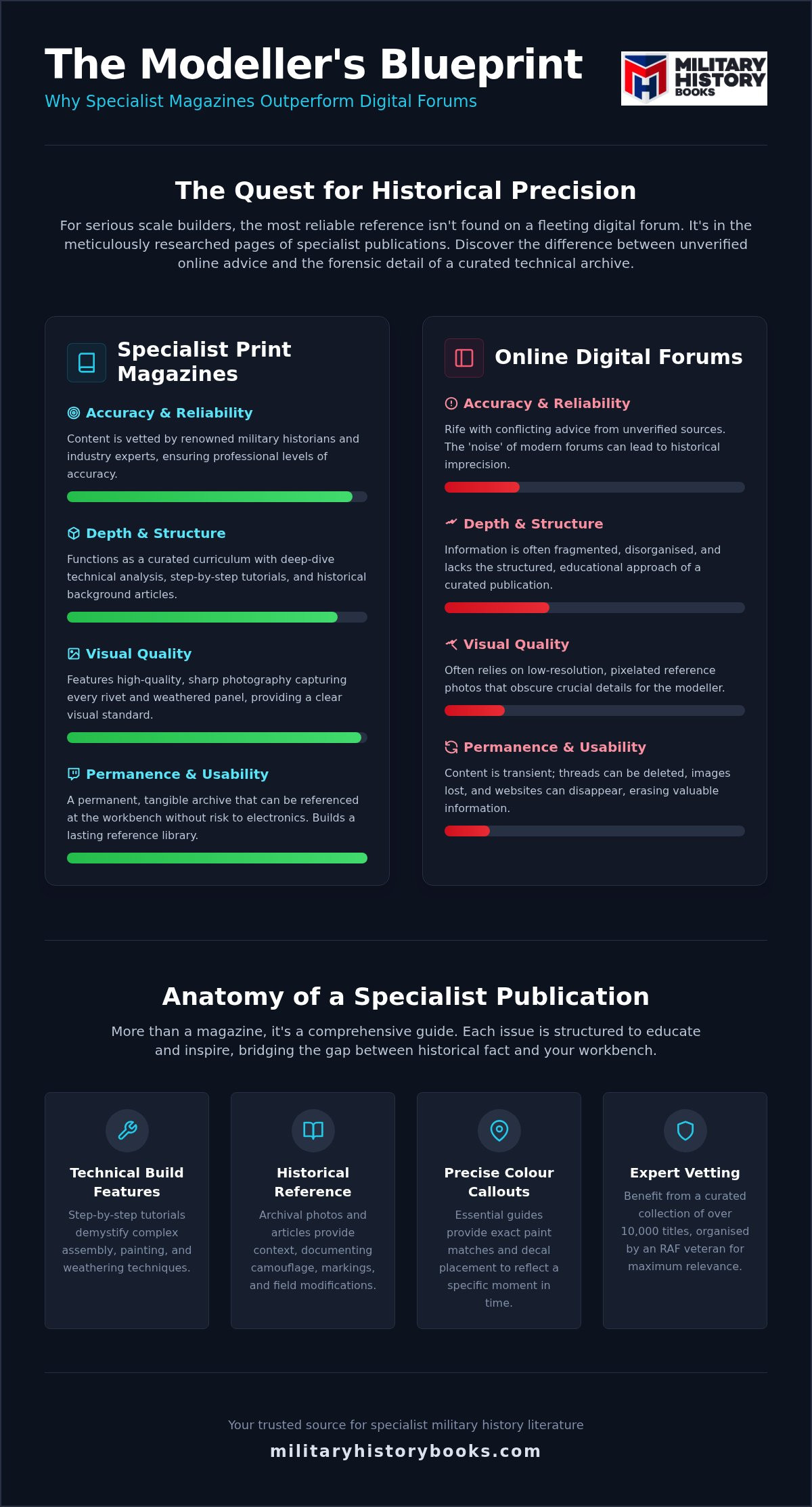
A specialist title isn't just a collection of photographs; it's a curated curriculum for the dedicated enthusiast. These publications function as indispensable military modelling guide books, offering a level of meticulous scrutiny that transient digital posts simply cannot match. From the initial sprue review to the final weathering wash, every stage of a project is documented with a specific educational purpose in mind. This structured approach ensures that you aren't just building a kit, you're mastering a craft whilst building a historical archive.
Technical Build Features and Tutorials
The core of any high-quality issue is the step-by-step build feature. These tutorials demystify complex assembly and weathering processes, such as applying hair-spray chipping or oil-brush rendering. Expert commentary addresses specific technical challenges like poor part fit or the integration of complex photo-etch details. Whilst online videos are popular, they are often fragmented and difficult to reference at the workbench. A printed guide allows you to pause, examine a macro photo, and proceed at your own pace without the risk of damaging electronics with glue or paint. In-box reviews are equally vital, helping collectors evaluate the quality and accuracy of a kit before committing to a purchase.
Historical Reference and Accuracy
Accuracy is the foundation of this hobby. These publications frequently include historical background articles written by renowned military historians who vet the editorial content for precision. They utilise archival photos that offer a fresh perspective on familiar subjects, often revealing previously undocumented field modifications or unique unit markings. For those researching wartime history books UK, the colour-callout sections are essential. These guides provide exact paint matches and decal placement instructions, ensuring the finished model reflects a specific moment in time. You'll also find reviews of limited-run accessories from cottage industry firms, which are often the only way to achieve true historical fidelity. If you are looking to expand your own library, you might consider browsing our extensive collection of specialist titles to find the perfect reference for your next project.
Magazines vs Digital Forums: The Case for Print
Whilst digital platforms offer instant access, they often lack the permanence and curated precision found in physical publications. For many, military modelling guide books represent a more reliable investment of time and resources. Unlike a forum thread that can be deleted or lost to a broken link, a printed magazine remains on your shelf, ready to be consulted whenever a project requires specific historical data. The high-quality paper and professional photography provide a clarity that backlit screens often fail to match, especially when you're trying to discern subtle camouflage shades or complex weathering effects.
Reliability and Peer Review
The editing process for a specialist title is rigorous, involving multiple stages of fact-checking and technical review. This stands in stark contrast to the anything goes nature of social media or digital forums, where enthusiasm often outstrips accuracy. Contributors to these magazines are frequently veteran modellers or historians with intimate knowledge of their subjects, providing a level of authority that unverified online comments simply cannot provide. Effectively, the magazine serves as a peer-reviewed journal for the modelling community, ensuring that the techniques and historical data shared are both practical and historically sound.
Tactile Reference at the Workbench
Practicality remains a primary reason why print persists in the workshop. Having a magazine open at a specific page whilst working allows for instant reference without the risk of getting enamel thinners or polystyrene cement on an expensive tablet screen. Physical copies also make it easier to cross-reference multiple sources simultaneously, perhaps pairing a build guide with other military history books from your collection. The longevity of print is undeniable; a twenty-year-old publication remains just as valid a reference today as it was on the day of release. Building a library of back issue military magazines UK enthusiasts can rely on creates a permanent technical archive that doesn't depend on an internet connection or a software update.
Organising and Sourcing Back Issue Magazines
Finding specific technical data for a build often requires looking backward rather than forward. Whilst modern publications are excellent, the true depth of a subject is often found in the back issues that primary publishers no longer stock. Sourcing these requires a different strategy, particularly when you need to match a specific aircraft or armoured vehicle type to a historical moment. Building a chronological archive, perhaps focusing on the Battle of Britain or the Desert War, allows you to see how technical interpretations have evolved. It's vital to source these from specialists who understand the condition and rarity of out of print military books and magazines, as a missing supplement or a damaged page can ruin the reference value for a modeller.
Finding Rare and Out-of-Print Issues
Collectors often target issues that coincide with major kit releases, such as the landmark Airfix 1/24 scale series or newly-tooled armour launches. These magazines frequently contained exclusive technical supplements, scale drawings, and fold-out plans that were never reprinted. Specialist booksellers play a crucial role here, tracking down specific issues that contain the exact cockpit layout or engine detail you need. Issues featuring comprehensive scale drawings are particularly sought after, as they provide the geometric foundation for any high-fidelity build. If you're struggling to find a specific technical reference, you can explore our inventory of over 10,000 titles to find that elusive back issue.
Preserving Your Modelling Archive
Once you've secured these military modelling guide books, preservation becomes the priority. To prevent fading and spine damage, store your collection in a cool, dry environment away from direct sunlight. Using acid-free binders allows you to organise your magazines by year or subject matter, making it easier to pull a specific volume when starting a new project. Many serious modellers create a simple physical index of their collection, categorising articles by vehicle type or historical era. This methodical approach ensures that your library remains a functional tool rather than just a stack of paper, allowing for quick reference during the critical stages of a build. By treating your magazines with the same respect as your tools, you ensure they remain a valid reference for decades to come.
Sourcing Specialist Literature with Military History Books
Finding the right reference material shouldn't be a matter of chance. At Military History Books, we recognise that a build's success often rests on the forensic quality of your research. Our inventory of over 10,000 titles includes a vast array of military modelling guide books, offering a depth of choice that general retailers simply cannot provide. Whether you're searching for a specific back issue to confirm a camouflage pattern or a technical manual for a rare tank variant, our collection serves as a vital bridge between the historical record and your workbench. We understand the value of these physical archives; that's why we're committed to secure national delivery for every order, ensuring fragile copies arrive in the condition described.
A Veteran-Led Perspective
Our business is managed by an RAF veteran, which brings a unique level of service-informed authority to our curation process. This background informs the selection of every title, especially when evaluating the technical accuracy of aviation and land warfare publications. You aren't just purchasing from a general bookseller; you're sourcing material from a curator who understands the weight of the history involved. We're dedicated to the preservation of these stories, ensuring that the technical details and human experiences of those who served are protected for future generations of modellers and historians.
Your Gateway to Rare Military Titles
If you're searching for a specific out-of-print technical guide or a rare supplement, we encourage you to contact us directly. We often assist individual readers with specific requests, using our expertise to track down elusive titles that primary publishers no longer stock. For those managing limited shelf space, we also offer digital titles on disc, providing the same high-level research in a more compact format. You might also consider pairing your technical magazines with our broader selection of military fiction or biographies to gain a truly comprehensive view of your subject matter. Browse our full range of modelling magazines and military history books today.
Building Your Professional Reference Library
Airfix modelling magazines are more than just hobby guides; they're essential technical archives that bridge the gap between kit assembly and historical research. By choosing the reliability of print over unverified digital sources, you ensure that your workbench reference is both accurate and permanent. These military modelling guide books provide the forensic detail needed to transform a standard build into a historically faithful recreation.
Our specialist shop, managed by an RAF veteran, offers over 10,000 titles to help you find the exact back issues or rare publications your project requires. We provide secure national delivery, ensuring that your fragile references arrive in excellent condition. Explore our extensive collection of Airfix and military modelling magazines today and discover the missing piece for your next scale masterpiece. We look forward to helping you preserve the stories behind the machinery you build.
Frequently Asked Questions
Where can I find back issues of Airfix Model World magazine?
You can find a vast selection of back issues through specialist retailers like Military History Books. Whilst primary publishers often stop stocking issues after a few months, our inventory of over 10,000 titles includes rare and out-of-print editions from across the decades. We focus on preserving these technical archives for collectors and researchers, ensuring that even the most obscure technical supplements remain accessible to the modelling community through our secure national delivery service.
Are old Airfix modelling magazines still relevant for modern kits?
Old publications remain highly relevant because the historical facts they document, such as camouflage patterns and unit markings, do not change. Whilst kit engineering has improved, the archival photos and scale drawings found in older military modelling guide books provide essential reference for achieving professional accuracy. Many veteran builders prefer these classic guides for their forensic attention to detail, which often surpasses the generic instructions provided in modern plastic model kits.
Do Airfix modelling magazines cover other brands like Tamiya or Revell?
Yes, these magazines function as comprehensive journals for the entire scale modelling hobby. Although they carry the iconic British brand name, the editorial content regularly features high-quality builds and reviews of kits from international manufacturers like Tamiya, Revell, and Hasegawa. This inclusive approach ensures that modellers have access to expert advice and historical context regardless of which brand they prefer to build, making them a universal resource for the community.
What is the difference between a modelling magazine and a bookazine?
A standard magazine is a periodical publication released monthly, covering a broad range of news, reviews, and varied builds. In contrast, a bookazine is a high-quality, one-off publication that provides an exhaustive deep dive into a single subject, such as the Battle of Britain or a specific armoured vehicle. Bookazines often function more like reference books, offering extended historical essays and technical diagrams that are too detailed for a regular monthly issue.
How do I identify a rare or collector’s edition modelling magazine?
Rare issues are typically identified by their inclusion of exclusive supplements, such as fold-out scale drawings or specific decal sheets that were never reprinted. Early editions from the 1960s and 1970s in excellent condition are highly prized by collectors. You should also look for anniversary specials or issues that coincided with landmark kit releases. Identifying these requires a specialist's eye, which is why we carefully curate our collection to highlight these unique technical resources.
Can I buy digital versions of out-of-print Airfix magazines?
You can certainly access digital versions of many out-of-print titles. At Military History Books, we provide a variety of digital titles available on disc, which is an ideal solution for modellers with limited shelf space. These digital archives preserve the high-quality photography and technical drawings of the original print runs, allowing you to zoom in on specific details whilst keeping your technical library organised and easily accessible on a modern computer.
Why should I buy from a specialist military history bookseller?
Buying from a specialist ensures that the material has been curated by someone with deep subject-matter expertise. Our business is managed by an RAF veteran who understands the specific technical needs of modellers and historians. Unlike general retailers, we can provide detailed information on the condition of rare titles and offer a bridge to other specialist literature. We maintain over 10,000 titles, focusing on the preservation of military stories and technical precision.
Do modelling magazines include historical information as well as build tips?
Yes, these publications are valued specifically because they combine practical build tips with rigorous historical research. Most feature articles include pilot biographies, unit histories, and archival combat reports to provide context for the model. This dual approach helps you understand the human story behind the machinery. By using these magazines as military modelling guide books, you gain a deeper appreciation for the history whilst ensuring your finished project is as accurate as possible.


