

How many accounts of the Green Berets are lost to the sensationalism of ghost-written thrillers, leaving the true history of the Corps buried in out-of-print archives? You likely recognise that building a serious collection of Royal Marines Commando books requires more than just picking up the latest airport bestseller; it demands a discerning eye for authenticity and a commitment to finding the primary sources that define the service's legacy. Whether you're a dedicated researcher or a casual enthusiast, you know that the most valuable insights often come from the technical details of a unit-specific history rather than a dramatised novel.
In this guide, we'll show you how to curate a definitive library of Royal Marines literature that balances visceral first-hand memoirs with objective historical data. You'll discover a structured framework for categorising these works, from the tactical evolution of WWII Commandos to the modern operations of 3 Commando Brigade. We'll also provide practical advice on sourcing rare first editions and list the essential titles every serious research library should contain. By the end, you'll have the knowledge needed to distinguish between commercial fluff and the genuine records that preserve the human experience of this elite naval force.
Key Takeaways
- Learn how Royal Marines literature evolved from secretive wartime reports into a rich, specialised sub-genre of naval and land warfare history.
- Discover how to balance your collection of Royal Marines Commando books by combining subjective personal memoirs with objective unit histories and tactical studies.
- Gain the skills to identify authentic narratives and avoid sensationalised accounts by understanding the importance of official vetting and historical accuracy.
- Understand why specialist Commando titles often have short print runs and how to navigate the market for rare first editions and signed copies.
- Establish a structured framework for curating a professional-grade research library that prioritises technical depth over generic bestsellers.
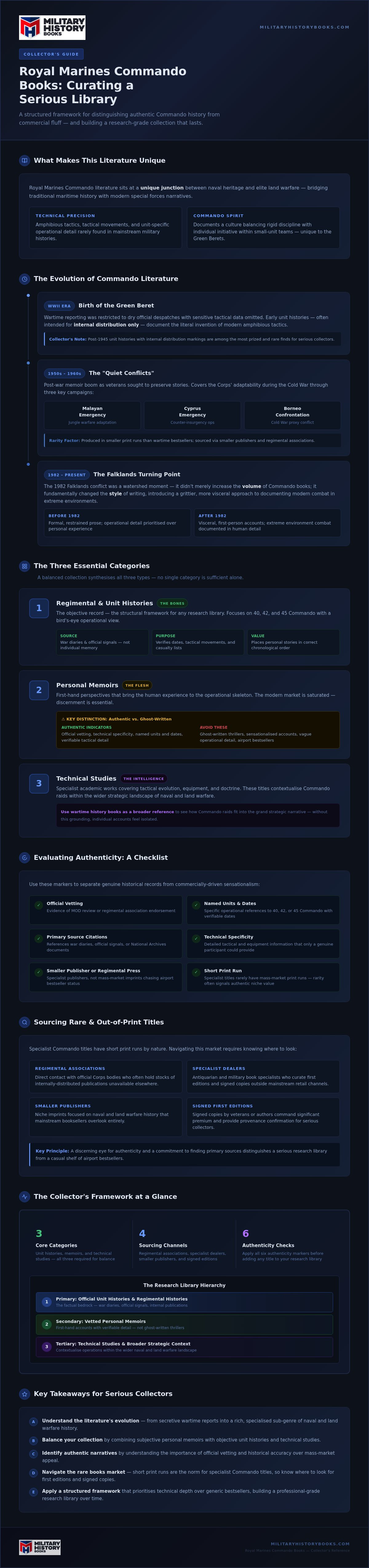
The Evolution of Royal Marines Commando Literature
The literature of the Royal Marines Commando occupies a unique space at the junction of naval heritage and elite land warfare. It represents a distinct sub-genre that captures the specific challenges of amphibious operations, bridging the gap between traditional maritime history and modern special forces narratives. Global military historians value these accounts for their technical precision and the peculiar "Commando spirit" they document, a culture that balances rigid discipline with individual initiative amongst the small-unit teams.
The transition in this field has been remarkable. During the conflict years, reporting was often restricted to dry, official despatches or secretive accounts that omitted sensitive tactical data. The post-1945 period, however, triggered a memoir boom as veterans sought to preserve their stories before they faded. This momentum was later accelerated by the 1982 Falklands conflict. That campaign didn't just increase the volume of Royal Marines Commando books; it fundamentally changed the style of writing, introducing a grittier, more visceral approach to documenting modern combat in extreme environments.
WWII Foundations: The Birth of the Green Beret
Early literature from this era focuses on the experimental nature of the Inter-Allied Commando units before the Royal Marines fully adopted the role in the mid-1940s. The most prized items for collectors are often the unit histories published immediately after 1945. These were frequently intended for internal distribution amongst the men, making them rare finds today. These seminal works are the essential foundation for any military history books collection, as they document the literal invention of modern amphibious tactics.
Post-War and the "Quiet Conflicts"
Whilst the World Wars dominate many shelves, the literature covering the "quiet conflicts" of the 1950s and 60s offers some of the most insightful reading for specialists. Accounts of the Malayan Emergency, the Cyprus Emergency, and the Borneo Confrontation showcase the Corps' adaptability during the Cold War. These titles are often harder to find because they were produced in smaller print runs than wartime bestsellers. Identifying these rare Royal Marines Commando books requires a keen eye for smaller publishers and regimental associations, but they provide an invaluable record of how the Green Berets transitioned into the modern 3 Commando Brigade.
Essential Categories: From Unit Histories to Personal Memoirs
Building a comprehensive library of Royal Marines Commando books requires a balanced approach to categorisation. A serious researcher doesn't simply collect every title available; instead, they curate a selection that synthesises subjective personal experiences with objective tactical data. This process often begins by identifying three primary categories: personal memoirs, regimental histories, and technical studies. By understanding the specific value of each, you can ensure your library offers both the visceral reality of combat and the cold, hard facts of military operations.
Context is equally vital when examining these elite units. Utilising wartime history books UK as a broader reference allows you to see how Commando raids fit into the wider strategic landscape of naval and land warfare. Without this grounding, individual accounts can feel isolated from the grander historical narrative.
Regimental and Unit Histories: The Objective Record
Regimental and unit histories provide the "bones" of any historical enquiry. Works focusing specifically on 40, 42, or 45 Commando offer an objective, bird’s eye view that individual memoirs often lack. These records are indispensable for verifying specific dates, tactical movements, and casualty lists. Researchers often prefer these official accounts because they rely on war diaries and official signals rather than the potentially fallible memory of a single individual. They document the transition of units through various theatres, providing a structural framework that helps you place personal stories in their correct chronological order.
The Commando Memoir: First-Hand Perspectives
If regimental histories are the bones, memoirs are the flesh. However, the modern market is saturated with ghost-written thrillers that often prioritise sensationalism over historical accuracy. What distinguishes the best Royal Marines Commando books from generic bestsellers is the presence of an authentic voice. Memoirs that define the RM experience in the Falklands, Iraq, or Afghanistan are most valuable when they come from the "lower ranks." These perspectives offer a raw look at the culture of the Corps, the reality of the "yomp," and the internal dynamics of a Troop that official histories simply cannot capture.
Finally, do not overlook technical publications and doctrine manuals. These titles explain the "how" behind the history, detailing the specific equipment, landing craft, and weapons that defined Commando operations. If you are struggling to find these more specialised unit records, browsing a specialist collection of naval titles is often the most efficient starting point for your research.
Evaluating Authenticity in Commando Narratives
Identifying the difference between a genuine historical record and a sensationalised thriller is the hallmark of a skilled researcher. Many Royal Marines Commando books published recently lean into a style of storytelling that prioritises drama over the technical reality of amphibious operations. Authenticity isn't just about the author's presence at an event; it's about how they present the facts and whether those facts align with the established historical record. For those building a serious archive, the ability to filter out "tabloid" war stories is essential to maintaining the integrity of their collection.
The "Sensationalism" Filter
Modern publishing often rewards high-octane narratives that read more like fiction than history. You can spot these titles by looking at how they describe special operations. If a book exaggerates the "lone wolf" aspect or ignores the complex logistics and teamwork inherent to the Corps, it's likely a commercial product rather than a historical one. Technical inaccuracies regarding weaponry, unit structure, or rank are immediate red flags. True Commando history is built on precise doctrine and discipline, not Hollywood-style heroics. Authentic accounts don't shy away from the friction and mundane challenges of service life; they embrace them as part of the reality of the Green Beret experience.
The Role of Citations and Bibliographies
Serious collectors usually look at the back of a volume before they read the first chapter. A robust source list or bibliography shows the author has engaged with official records or the Ministry of Defence vetting process. Modern publications by serving or former personnel must pass through official channels to ensure operational security, but this doesn't mean they lack detail. To gain a complete picture of an operation, you should cross-reference personal memoirs with military biography books written by senior officers. These higher-level accounts provide the strategic oversight and context needed to verify the claims made in individual soldier narratives.
Watch for an absence of specific unit citations or Troop numbers in the text. If a narrative feels too smooth or lacks the technical terminology unique to the Royal Marines, it might have been overly polished by a ghostwriter. Authentic Royal Marines Commando books provide enough specific detail-such as the exact type of Landing Craft used or the specific timings of a beach assault-for a researcher to verify the timeline against official unit diaries and archival records. This level of detail is what separates a lasting historical reference from a temporary bestseller.
Sourcing Rare and Out-of-Print Royal Marines Titles
Finding Royal Marines Commando books often feels like an exercise in patience and persistence. Unlike mainstream military histories, these specialised unit records were frequently produced in very small numbers, sometimes intended solely for internal distribution within the Corps or for limited regimental associations. This limited circulation means that significant titles can vanish from the market within a few years of publication. For the serious collector, the significance of first editions or copies signed by veterans cannot be overstated; they represent tangible connections to the amphibious heritage of the Green Berets and hold a unique place in the naval history market.
Generalist marketplaces often struggle with this niche. They rely on automated systems that cannot appreciate the historical weight of a specific unit history or the nuances of a particular edition. By contrast, a specialist curator understands the difference between a mass-market reprint and a rare primary source. This expertise is particularly useful when you're trying to source out of print military books that have been out of general circulation for decades. A veteran-managed inventory offers a level of material selection that algorithms simply cannot replicate, ensuring that every title on the shelf meets a high standard of historical relevance and physical condition.
The Specialist Advantage for Collectors
A curated inventory provides more than just a list of products; it offers a gateway to specific knowledge that generalists miss. When you purchase from a specialist who understands the service, you're benefiting from a vetted selection of material. This is especially important for those looking to fill specific gaps in their research, such as locating unit-specific histories for 40 or 45 Commando. Specialist channels also allow for bespoke requests, where a curator can use their network to locate titles that aren't currently listed, providing a level of service that larger, impersonal platforms don't offer.
Magazines and Technical Publications
Primary research often requires looking beyond the traditional book format. Contemporary reporting found in back issue military magazines UK provides an unvarnished look at how operations were perceived at the time they occurred. These magazines, alongside unit newsletters and specific technical manuals for amphibious warfare, contain technical data and personal anecdotes that larger volumes might omit. As these paper records age, they become increasingly fragile. Digital downloads and titles on disc now play a vital role in preserving these rare documents, allowing collectors to study technical diagrams and tactical reports without damaging the original physical copies. This blend of physical and digital media is the most effective way to maintain a comprehensive research library.
If you're ready to expand your archive, you can explore our specialist inventory of rare naval history titles to find those elusive volumes that complete your collection.
Curating Your Library with Military History Books
Transitioning from a casual interest in the Green Berets to becoming a specialist researcher is a rewarding journey. It's the difference between owning a few popular paperbacks and maintaining a library that accurately reflects the technical and human history of the Corps. A shelf filled with generic bestsellers might offer entertainment, but a curated selection of rare and technical Royal Marines Commando books provides the objective data and authentic detail required for serious study. This transition requires a move away from algorithm-driven recommendations towards a more methodical approach to sourcing primary material.
Expert Support for Serious Researchers
Finding the right material is significantly easier when you have access to a seasoned curator. As a business managed by an RAF veteran with specialist expertise, we understand the nuances of military service and the importance of preserving these records for future generations. We help you build topical collections focused on specific RM eras or units, such as the initial conversion to Commando roles in the 1940s or the modern operations of 3 Commando Brigade. Our inventory of over 10,000 titles ensures that serious researchers can find the depth they need, whilst our commitment to secure worldwide delivery supports international enthusiasts in their pursuit of elite naval history.
Starting Your Specialised Collection
A truly comprehensive archive shouldn't be limited to dry official reports. A well-rounded library includes military fiction that captures the contemporary atmosphere of the service, alongside detailed biographies and technical manuals. We encourage the use of technical publications to supplement narrative reading, as these provide the "how" behind the "what" of historical operations. By integrating these different formats, you create a multi-dimensional view of the Royal Marines that a single volume cannot provide.
Whether you're looking for rare unit histories or the latest technical studies, our collection offers the breadth and quality required for a serious research library. We invite you to explore the full range of land and naval warfare literature available on our site. Browse the latest arrivals in our Royal Marines Commando books section today to find the elusive titles that will complete your definitive history of Britain's elite amphibious force.
Preserving the Legacy of the Green Berets
Building a definitive collection of Royal Marines Commando books is a process that rewards the meticulous researcher. You've seen how the genre evolved from restrictive wartime despatches to gritty modern accounts, and you now understand the vital balance between subjective memoirs and the objective data found in official regimental histories. By applying a rigorous filter for authenticity and technical accuracy, you can ensure your library serves as a reliable record of elite naval history rather than a collection of sensationalised stories.
Whether you're hunting for a rare unit history or a technical manual on amphibious warfare, our inventory of over 10,000 specialist military titles provides the depth you need. Every volume is expertly curated by an RAF veteran who understands the historical weight of these records. We offer secure international delivery to support collectors across the globe in their pursuit of excellence. Browse our specialist collection of Royal Marines Commando books today and find the next essential addition to your archive. Your journey into the heart of Commando history is just beginning.
Frequently Asked Questions
What are the most accurate books on the Royal Marines in the Falklands?
Accurate accounts of the Falklands often come from those who commanded the operations or from official unit histories. Major General Julian Thompson's "No Picnic" is widely regarded as a definitive record of 3 Commando Brigade's actions. For a broader view, look for regimental records that synthesise signals data with tactical reports. These titles provide the objective framework needed to understand the complexity of the yomp and the final assaults on the mountains.
Can I find out-of-print unit histories for 45 Commando?
Yes, we specialise in sourcing out-of-print unit histories for 45 Commando and other specific units. Because these books often had small print runs for internal distribution, they can be difficult to find through generalist retailers. Our inventory of over 10,000 specialist titles includes rare editions that document the specific movements and actions of 45 Commando throughout their historical deployments. You can search our collection for these elusive regimental records.
Are there digital versions of Royal Marines technical manuals available?
We offer a selection of digital titles by download and on disc that include rare technical manuals and reports. These digital formats are excellent for preserving the contents of fragile primary source documents that might otherwise be lost to time. They allow you to study tactical diagrams and equipment specifications without risking damage to a physical copy. This is a practical way to expand your collection of Royal Marines Commando books whilst accessing technical data.
How do I know if a Royal Marines memoir is historically accurate?
Historical accuracy in a memoir is best verified by cross-referencing the author's claims with official war diaries or Ministry of Defence records. Look for accounts that provide specific dates, unit citations, and technical details about weaponry or equipment. If a narrative feels overly polished or ignores the logistical realities of service, it may have been sensationalised. Authentic Royal Marines Commando books usually include a bibliography or acknowledgements that link to official sources.
What is the difference between a regimental history and a personal memoir?
A regimental history provides an objective, chronological record of a unit's operations based on official signals and war diaries. It offers a strategic overview of how a Commando unit functioned within a larger campaign. In contrast, a personal memoir focuses on the subjective experience of an individual soldier. Whilst the memoir captures the raw culture and emotion of the Corps, the regimental history provides the factual skeleton that keeps the narrative grounded in reality.
Do you stock books on the Special Boat Service (SBS) alongside RM titles?
We stock a wide range of titles covering the Special Boat Service (SBS) alongside our primary Royal Marines collection. Given the close historical ties between these elite units, our inventory of naval history and land warfare books naturally encompasses the secretive operations of the SBS. You'll find both historical accounts of their WWII origins and modern tactical studies that examine their role within the UK's special forces framework.
How can I identify a first edition Royal Marines history book?
Identifying a first edition requires a close inspection of the copyright page, often looking for a "1" in the number line or a specific publication date that matches the first known printing. For many specialist unit histories, the first edition was the only edition ever printed. We use our expertise as specialist curators to verify these details, ensuring that collectors receive authentic material. Look for specific publisher imprints that were active during the era the book describes.
Do you provide international shipping for rare naval history titles?
We provide secure international delivery for global collectors seeking rare naval history and specialist titles. We understand that serious researchers are located all over the world, so we ensure that every order is packaged with the care required for out-of-print material. Whether you are ordering a single technical manual or a multi-volume unit history, your books will be dispatched using reliable courier services to ensure they reach you in excellent condition.


